
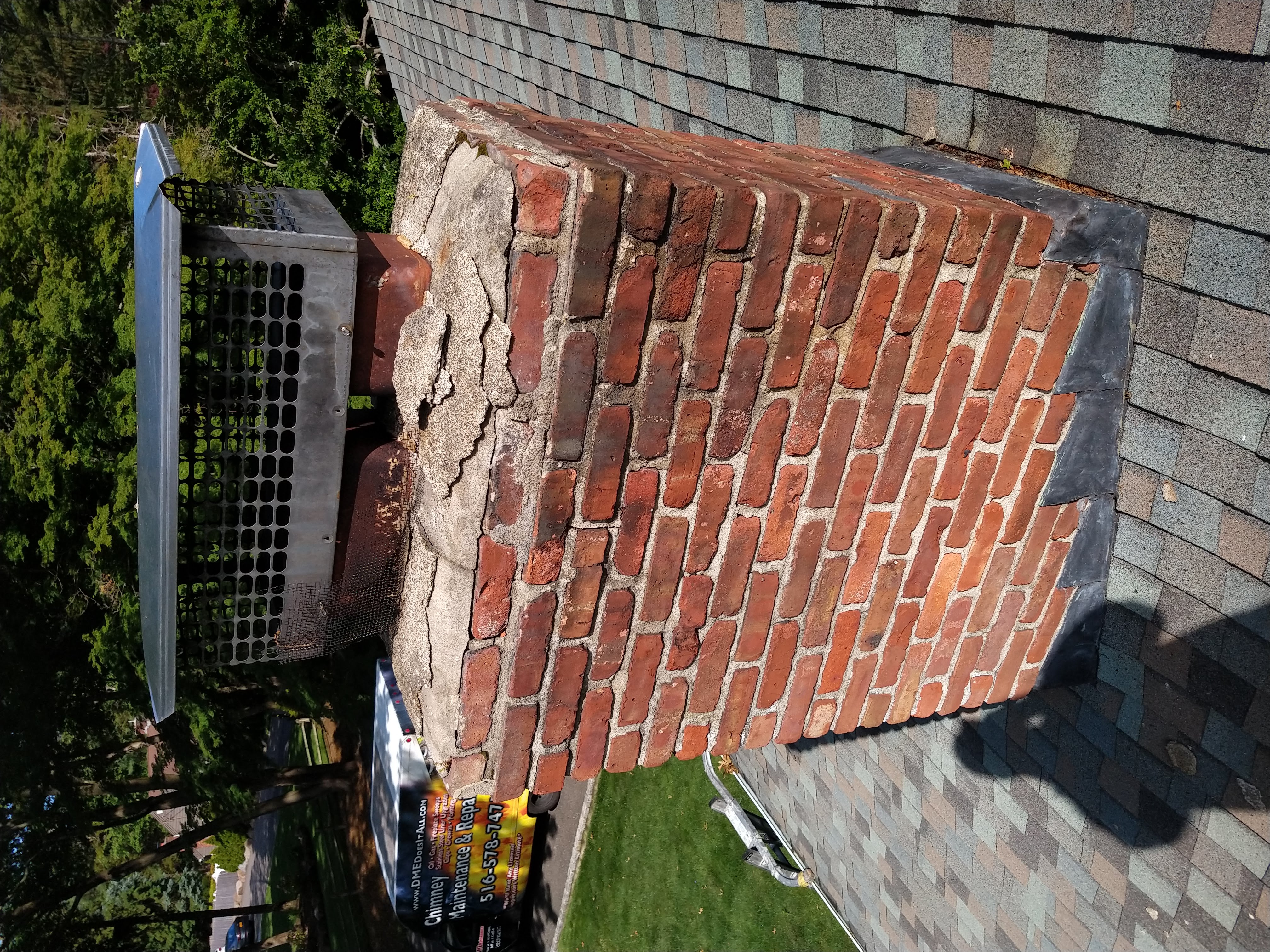
Chimney mortar breaks down over time. On Long Island, the cycle of freezing and thawing accelerates this deterioration faster than most regions. Winter temperatures drop below freezing, then spring warming thaws everything out. Water seeps into tiny cracks in aging mortar. That water expands when it freezes again. The mortar joint weakens further. This repeats year after year. Homes in Oyster Bay, NY—many built decades ago with solid masonry construction—face this challenge constantly. Your chimney's mortar won't last forever, no matter how well it was installed originally. Spring and summer offer the ideal window for pointing work because fresh mortar needs warm, dry conditions to cure properly.
Oyster Bay homeowners often notice mortar problems only after water damage shows up inside. A leak around the chimney base. Damp spots on the attic floor. Staining on the interior walls near the flue. These signs mean water has already penetrated deeper than just the surface joints. When mortar deteriorates, it loses its seal almost completely. Rain and snow melt don't just sit on the outside anymore. They find their way through gaps between bricks. On Long Island, where we're close to Long Island Sound and salt-laden air affects properties near the water, this moisture infiltration becomes even more aggressive. Early intervention through pointing work stops this progression before structural damage requires expensive rebuilding.
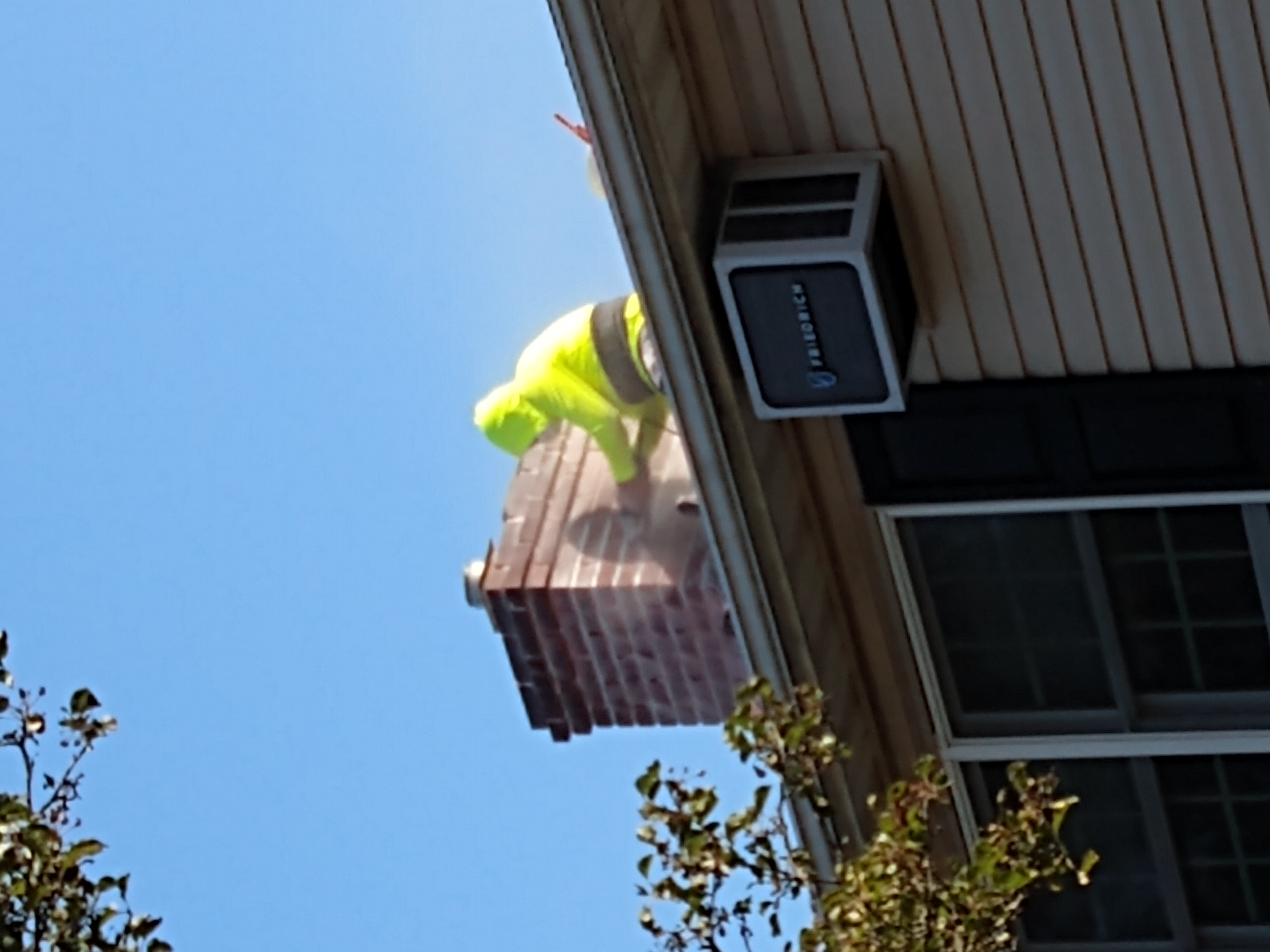
The pointing process is straightforward in concept but demands precision in execution. DME Maintenance carefully removes the deteriorated mortar from between the bricks using specialized tools. We work to the proper depth—typically about two to three inches back from the surface. We then clean out all dust and debris from those joints. Fresh mortar, mixed to the correct consistency and composition, gets pressed firmly into the cleaned space. The mortar is tooled smooth to shed water effectively. Oyster Bay residents benefit when this work is done correctly because proper joint profiles prevent water from pooling or running down inside the walls. Poor pointing work actually traps moisture and causes faster deterioration than no work at all.
Timing matters enormously for chimney pointing success. Spring and summer on Long Island provide the warmth and low humidity that new mortar requires. When temperatures stay above fifty degrees consistently, mortar hydrates and hardens as intended. Fall and winter conditions slow this process dramatically. Cold nights interrupt curing. Moisture from rain or snow can ruin mortar that hasn't fully set. Homes in Oyster Bay and the surrounding Nassau County, NY area see the best results when pointing is scheduled between April and September. Early scheduling in spring often means your chimney is weather-sealed before the heavy rains of late spring arrive.
Long Island's proximity to coastal waters creates unique environmental stresses on masonry. Salt spray, even for properties not immediately waterfront, affects mortar composition over decades. The salt accelerates chemical breakdown of older mortar mixes. Homes in Oyster Bay Cove and other water-adjacent areas experience this more intensely, but Oyster Bay residents throughout the broader region face similar pressures from our maritime climate. Your chimney's mortar was likely installed with a standard mix that served well for many years. After fifty or more years, that mortar has lost its binding power. Fresh mortar formulated for modern conditions and Long Island's specific climate performs far better than attempting surface patches or quick fixes.
Deteriorating mortar also invites structural movement that extends beyond the chimney itself. Moisture infiltration weakens the mortar bond between bricks. Bricks can shift slightly as that bond fails. In homes on Long Island where chimneys pass through multiple floors, any movement at the base compounds as you go higher. Cracks develop in the masonry itself. Once bricks crack, they cannot be repaired—they must be replaced. This turns a pointing job into a full rebuild. Oyster Bay homeowners who address mortar deterioration early avoid this exponential cost increase. Pointing work represents genuine prevention, not merely cosmetic improvement.
Oil heat remains common in homes on Long Island, including throughout Oyster Bay. Oil-fired heating systems generate significant flue temperatures and moisture condensation inside chimneys. This internal moisture, combined with external water infiltration from failed mortar, creates a hostile environment for brick and mortar. The mortar weakens from both sides simultaneously. You might not see external damage until internal deterioration has advanced considerably. Regular inspection and timely pointing prevent the cascade of problems that develops when moisture moves freely through failed joints. DME Maintenance has served Oyster Bay, NY homeowners since 2001, and we understand the specific demands that Long Island heating systems place on chimney structures.
Spring and summer work schedules fill quickly because the weather window is narrow and demand is high. Oyster Bay residents who wait until late summer often find that contractors are booked solid. Early spring scheduling gives you flexibility and ensures your chimney receives attention before rain season intensifies. Delaying into fall means work won't be completed until the following spring—leaving your chimney unprotected through another winter. That extra season of freeze-thaw cycling causes measurable additional damage. Homes in Oyster Bay that are pointed in spring are protected through the upcoming winter. You'll sleep better knowing your masonry has been restored properly and will shed water effectively.
Homeowners throughout Oyster Bay have trusted DME Maintenance for chimney cleaning, liner installation, and masonry repairs since 2001. We are a local, Long Island-based, owner-operated company — not a franchise — so when you call, you reach someone who actually knows Oyster Bay and the surrounding communities.
Choosing the right contractor for pointing work matters significantly. This work requires understanding local masonry traditions, Long Island's climate demands, and proper technique. Not every contractor who claims chimney expertise actually performs quality pointing work. The difference between skilled pointing and careless work becomes obvious within a few years. Poor work fails again quickly. Skilled work lasts decades. DME Maintenance brings decades of experience to every Oyster Bay job. DME Maintenance has performed thousands of pointing projects on Long Island homes. We understand how mortar should look, feel, and perform in our region's specific conditions.
Your chimney is one of your home's most visible structural elements. It's also one of the most exposed to weather. On Long Island, where salt air and freeze-thaw cycles are constant forces, your chimney needs vigilant care. Oyster Bay homeowners who invest in quality pointing work protect their entire masonry investment. You prevent water damage to the interior structure. You avoid costly brick replacement. You extend your chimney's life by decades. Spring and summer represent your opportunity to complete this work while conditions favor success. Don't let another winter weaken your chimney further. Contact DME Maintenance today at 516-690-7471 to schedule an inspection and discuss your pointing needs. DME Maintenance is ready to restore your Oyster Bay chimney's integrity and your home's protection.